Farm To Table Front Desk Growth Guides
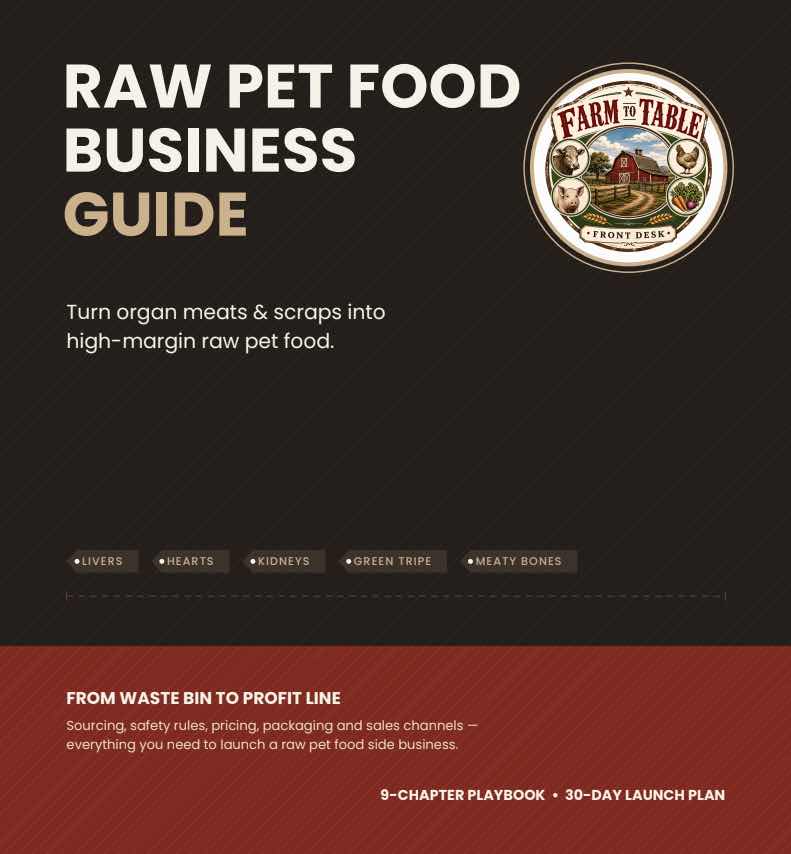
Raw Pet Food Business Guide
Raw Pet Food Business Guide
Couldn't load pickup availability
Turn Processing "Waste" Into a High-Margin Raw Pet Food Business
The organ meats, bones, and trim you discard or sell for pennies are exactly what raw feeders pay premium prices for. The Raw Pet Food Business Guide is a step-by-step system for turning those underutilized animal byproducts into recurring, high-margin income.
Every animal processed for meat produces valuable offal, meaty bones, and green tripe that too often go to rendering or the waste bin. For farms, ranches, butcher shops, and processors, that's lost revenue and disposal cost instead of profitable inventory.
Meanwhile, demand for locally sourced raw pet food keeps growing — and those ingredients are hard for pet owners to find through normal retail.
What the Raw Pet Food Business Guide Delivers
This is a business playbook, not just a recipe book. You'll learn how to source low-cost inventory, pick the highest-demand products, meet labeling and food safety requirements, and price for real margins.
Instead of treating offal as waste, you build a value-added product line that improves carcass utilization and creates a direct-to-consumer pet food brand.
What You'll Learn
- Source inventory cheap — or free — from slaughterhouses, butchers, poultry processors, and farms
- Know what sells — beef liver, heart, kidney, spleen, green tripe, raw meaty bones, and dehydrated treats
- Stay compliant — licensing, labeling, cold-chain handling, and food safety basics
- Package like a pro — portioning, vacuum sealing, batch coding, and traceability
- Price for margin — pricing by the pound, bundles, and recurring orders
- Sell and scale — local raw-feeding groups, farmers markets, delivery routes, and wholesale
What's Inside the Guide
The Cutting Order
- 01 — The Opportunity: why "waste" is the best product you'll ever sell
- 02 — Know Your Cuts: organ-by-organ guide to what raw feeders buy
- 03 — Sourcing: where to get scraps cheap — or free
- 04 — Rules & Safety: licensing, labels and cold-chain basics
- 05 — Prep & Packaging: from tote bin to freezer-ready product
- 06 — Pricing & Margins: the math that makes this a goldmine
- 07 — Where to Sell: channels ranked by effort and payoff
- 08 — Marketing: winning trust in the raw-feeding community
- 09 — Scaling Up: from side hustle to real brand
- 30-Day Launch Plan: your week-by-week checklist
How to use this guide: Read chapters 1–4 before you buy anything. Chapters 5–9 are your build-out. The launch plan at the back turns it all into one month of concrete to-dos.
Pricing examples throughout are illustrative, not income guarantees. Always confirm licensing, labeling, and food safety requirements with your state feed program before selling.
Frequently Asked Questions
How do I start a raw pet food business?
Start by understanding what products customers want, where to source quality organ meats and raw ingredients, how to package safely, and how to comply with your state's pet food regulations. The guide provides a step-by-step roadmap covering sourcing, labeling, pricing, marketing, sales channels, and a 30-day launch plan for new businesses.
Is a raw pet food business profitable?
A raw pet food business can create attractive margins because processors often sell organ meats, trim, and bones at low cost while raw feeders actively seek them. The guide explains pricing strategies, product margins, and recurring revenue opportunities. All pricing examples are illustrative rather than guaranteed.
What does this raw pet food guide teach?
This guide teaches you how to identify profitable raw pet food products, source inventory from processors and farms, understand labeling and food safety basics, package professionally, set profitable prices, market to local customers, and grow into a recognizable brand.
Can I start a raw dog food business with very little money?
Yes. Many entrepreneurs begin with basic equipment such as a vacuum sealer, freezer, scale, food-grade containers, and access to a licensed kitchen before investing in commercial equipment as demand grows.
What raw pet food products sell the best?
Some of the highest-demand products include beef liver, beef heart, kidney, spleen, green tripe, chicken necks, turkey tails, raw meaty bones, and dehydrated liver treats. The guide explains how each fits into common raw feeding practices and why some command premium prices.
Are organ meats for dogs a good business opportunity?
Organ meats are one of the strongest product categories because they're essential to many raw feeding routines yet hard for consumers to find locally. The guide explains how liver, kidney, spleen, and heart become profitable inventory instead of waste.
How do I sell raw pet food legally?
Selling raw pet food requires understanding your state's registration, labeling, and food safety requirements. The guide introduces FDA and state agriculture considerations and recommends confirming requirements with your state feed program before selling.
Where can I source ingredients for a raw dog food business?
Source from small slaughterhouses, independent butcher shops, farms, poultry processors, and seasonal processors. Products should come from inspected animals intended for food production and be handled using proper cold-chain practices.
How do I market a raw feeding business?
Build trust through sourcing transparency, educational content, customer referrals, farmers markets, local raw-feeding communities, and subscription-style repeat ordering — instead of relying on discounts or hype.
Where should I sell raw pet food?
For new businesses, focus on local raw-feeding groups, farmers markets, neighborhood delivery routes, and independent pet stores before attempting nationwide shipping. A strong local base creates repeat business and better margins.
Is this guide only for raw dog food?
No. While many examples involve dogs, the sourcing, packaging, pricing, and business principles also apply to serving cat owners who feed raw diets.
Does this guide include pricing strategies?
Yes. The guide includes example pricing tables, profit margin illustrations, bundling ideas, recurring order strategies, and methods for calculating profitable retail pricing from your own costs. The examples are educational illustrations, not income guarantees.
Can farmers and ranchers use this guide?
Absolutely. Farmers, ranchers, butchers, homesteaders, and processors with access to animal byproducts can use the guide to convert underutilized inventory into premium raw pet food products.
Does the guide explain food safety and packaging?
Yes. It covers cold-chain handling, packaging methods, labeling, traceability, batch coding, and food safety practices designed to help new businesses produce professional frozen raw pet food products.
Is this a complete raw dog food startup guide?
Yes — it's a practical business playbook rather than a recipe book. It covers opportunity analysis, product knowledge, sourcing, regulations, production, pricing, sales channels, marketing, scaling, and a 30-day launch plan.
What makes The Pet Food Goldmine different?
Most resources focus only on making raw pet food; this one focuses on building a profitable business around it. It teaches how to source overlooked byproducts, package them professionally, sell direct, develop recurring revenue, and grow into a recognized local brand.
What is included in this raw pet food guide?
The guide covers sourcing, regulations, food safety, product selection, packaging, labeling, pricing, marketing, sales channels, scaling strategies, and a week-by-week launch checklist.
How much does it cost to start a raw pet food business?
Startup costs vary, but the guide recommends beginning with basic equipment such as a chest freezer, vacuum sealer, scale, food-grade containers, and access to a licensed kitchen before investing in larger equipment.
Can I start a raw dog food business from my farm?
Yes. Farms are one of the ideal starting points because they already have access to livestock and processing relationships that can create additional value from underutilized products.
Can butchers create a raw pet food business?
Yes. Independent butcher shops often have trim, bones, and organs that customers rarely buy, and the guide explains how these become premium pet food inventory.
Why are organ meats for dogs so popular?
Many raw feeders use organ meats as part of balanced feeding routines. Because products like liver, kidney, and spleen are hard to find in retail stores, they can become premium products for specialty pet food businesses.
Where can I buy organ meats for dogs?
Build relationships with slaughterhouses, processors, butcher shops, poultry processors, and farms rather than relying solely on retail grocery stores.
How do I source organ meats for dog food?
Approach processors with a simple pickup proposal, maintain reliable pickup schedules, use cold-chain handling practices, and keep records of your product sources.
Can I build a business selling raw dog food locally?
Yes. Focus on local customers first through farmers markets, neighborhood pickup locations, delivery routes, and local raw-feeding groups before considering larger distribution.
How do I sell raw dog food locally?
Build trust through educational content, local community groups, farmers markets, referrals, and standing monthly orders.
Can I sell raw pet food at farmers markets?
Yes. Farmers markets are an effective way to introduce products, educate pet owners, distribute samples, and build repeat customers.
What should raw pet food packaging include?
Effective packaging practices include vacuum sealing, labeling every package, including batch information, and maintaining product traceability.
How do I label raw pet food?
Common label elements include product name, net weight, ingredient list, business information, guaranteed analysis, and required wording where applicable. Always confirm specifics with your state requirements.
Does this guide explain pet food regulations?
Yes. It introduces FDA oversight, state agriculture departments, labeling considerations, food safety practices, and the importance of checking local regulations before selling.
Can I sell pet food from my home?
Often not — many states require processing in licensed or inspected facilities, and home kitchens frequently don't qualify. Always verify requirements with your state.
What equipment do I need to make raw pet food?
Basic equipment includes a sharp knife, scale, food-grade containers, vacuum sealer, chest freezer, and access to a licensed kitchen.
How do I package raw dog food for sale?
Sort products, portion them into customer-friendly sizes, vacuum seal, label each package, and freeze products quickly.
Can I create dehydrated dog treats?
Yes. The guide identifies dehydrated liver treats as one of the highest-margin products in the product line.
What is the 80/10/10 raw feeding ratio?
The 80/10/10 ratio is approximately 80% muscle meat, 10% edible bone, and 10% organs. Understanding it helps sellers see how customers often shop for ingredients.
How should I price raw pet food?
Price by the pound, create bundled products, reward recurring customers, and understand total production costs before setting retail prices.
What are the best pet food business ideas for farmers?
Strong options include selling frozen organ meats, raw meaty bones, complete raw blends, dehydrated treats, bulk boxes, and subscription-style monthly orders.
Is this guide useful for ranchers?
Yes. Ranchers who already process livestock can learn how to create additional revenue from products that might otherwise be discarded or sold for very little.
Can processors create value-added livestock products?
Yes. The guide focuses on transforming organs, trim, bones, and similar byproducts into premium raw pet food products that create additional revenue.
What are value-added livestock products?
In this guide, value-added livestock products include raw pet food, frozen organ packs, raw meaty bones, bulk boxes, ground blends, and dehydrated treats created from underutilized animal products.
Is this a good pet food side hustle?
Yes. The guide specifically describes a weekend side-business model before progressing into a full-time business or wholesale brand.
Can I build recurring revenue selling raw pet food?
Yes. Subscriptions, monthly order boxes, neighborhood delivery routes, and standing customer orders all help build predictable recurring income.
What sales channels work best for raw pet food?
The best primary channels are local raw-feeding groups, farmers markets, neighborhood delivery routes, and independent pet stores.
Can I wholesale raw pet food?
Yes. Once production and labeling systems are established, you can approach independent pet stores with wholesale pricing and product line sheets.
What makes a successful raw pet food business?
Success depends on reliable sourcing, safe handling, professional packaging, transparent marketing, repeat customers, and disciplined operational systems — not simply producing pet food.
Is this guide suitable for beginners?
Yes. It starts with understanding the opportunity and progresses step by step through production, marketing, and growth, making it appropriate for first-time entrepreneurs.
Can I use this guide to create a raw feeding business plan?
Yes. The guide functions as a practical business playbook, helping you develop sourcing strategies, production workflows, pricing models, marketing plans, and launch timelines.
What are the best animal byproduct business ideas?
The guide shows how organs, trim, bones, green tripe, and other underutilized products become profitable raw pet food products, creating additional income from existing livestock processing.
Can I build a brand selling raw pet food?
Yes. The guide covers developing product labels, subscriptions, wholesale relationships, websites, and recognizable local branding as the business grows.
Does this guide include a startup checklist?
Yes. It concludes with a detailed 30-day launch plan covering legal preparation, sourcing, production, labeling, marketing, and first customer sales.
Who should buy The Pet Food Goldmine?
This guide is designed for farmers, ranchers, butchers, meat processors, homesteaders, entrepreneurs, and anyone interested in building a raw pet food business using underutilized animal byproducts.
Pairs with